[fusion_builder_container type=”flex” hundred_percent=”no”][fusion_builder_row][fusion_builder_column type=”1_1″ layout=”1_1″][fusion_text]
2D animation is drawn on a flat plane, so it suits characters, explainers and simple messages, and it’s usually quicker and cheaper to make. 3D animation is built as models in a virtual space, so it suits products, machinery and anything that needs to be seen from every angle. If your subject is an idea, start with 2D. If it’s an object, look at 3D.
That’s the quick version. Most of the guides you’ll find on this are written for people deciding which one to learn. This one’s for people deciding which one to pay for, with examples from films we’ve made for clients.
What’s the difference between 2D and 3D animation?
In 2D animation, everything on screen is flat artwork: characters, backgrounds, icons, text. It moves in height and width only. The look can be anything from simple flat shapes to a full comic-book style.
In 3D animation, everything is built as a model with depth. Once a product is modelled, it can be lit, textured and filmed by a virtual camera from any angle, including angles no real camera could get to: inside a machine, under a floor tile, down at the level of a single grain of abrasive.
Both can carry a voiceover, music, subtitles and on-screen text. The difference is in what the pictures can show, and how much work goes into building them.
When 2D animation is the right call
2D is the natural fit when the thing you’re explaining doesn’t have a physical shape. A service, a process, a policy, a health message, a money worry. Characters and simple visuals do the heavy lifting, and a well-written script does the rest.
- People and situations. 2D characters can represent your audience without anyone having to appear on camera.
- Sensitive subjects. Health, finance and safeguarding messages often go down better with illustrated characters than with actors.
- Tight deadlines. 2D usually takes less time to build than a detailed 3D scene.
- Lots of versions. Swapping on-screen text or a voiceover for another language is straightforward.
When Saint-Gobain Abrasives launched its Invincible Disc range across Europe, they came to us with a superhero mascot already drawn. We pitched an animated comic-book treatment for Mr Invincible. Full character animation wouldn’t have fitted a six-week deadline, and the simpler motion suited the comic-book look anyway. Because the film had no spoken dialogue, the Spanish, Turkish, French and German versions only needed translated on-screen text.
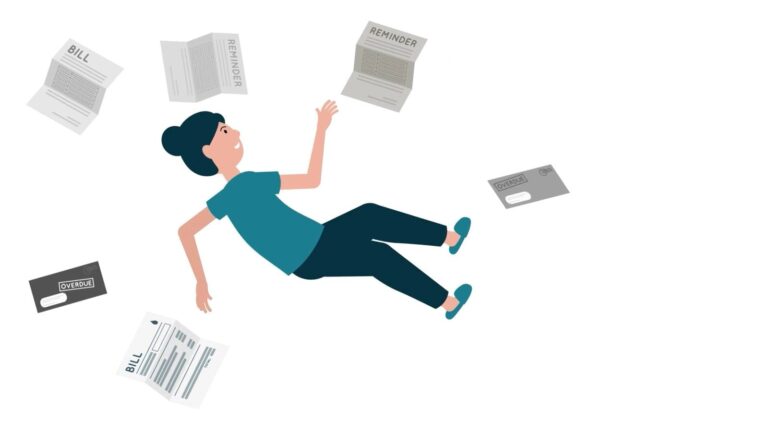
For County Durham and Darlington NHS Foundation Trust, we made a 2D animation encouraging staff to use the free stop smoking support. The style was bright and clean, with a diverse cast of characters who look like the people who work in the NHS. We even swapped out a scene about what you could buy with the money you’d save: a bike and some DIY made the cut, because luxury spending could have put parts of the audience off. It went from first meeting to sign-off in six weeks.

When 3D animation earns its place
3D comes into its own when the subject is a physical thing and the detail matters. Manufacturers, engineers and product teams use it because it can show what’s going on inside something, at a scale or speed a camera can’t capture.
- Products and mechanisms. Cut a product open, spin it round, show it working from the inside.
- Tiny or hidden detail. Materials, layers, coatings and grains that are too small or too buried to film.
- Realistic finish. Lighting and textures that look like the product on the shelf.
- Reuse. Once a model exists, it can give you stills for brochures and the website as well as the film.
Norton Razorstar is an engineered ceramic grain used on abrasive belts, fibre discs and backup pads. You can’t film what makes it special, because it’s happening at the scale of a single grain. So the Razorstar 3D animation takes the viewer from a machine-mounted belt in action down to a close-up of the abrasive texture, then shows how the grain cuts and fractures and how it compares with a competitor’s. Alongside the film, the client got a step-by-step version and image renders for their wider marketing.
Or use both (with live action too)
You don’t have to pick just one. Plenty of our projects mix 2D, 3D and filmed footage in the same piece.
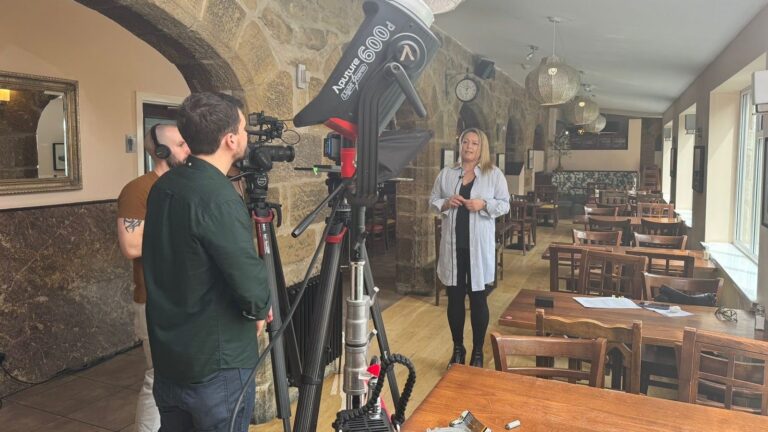
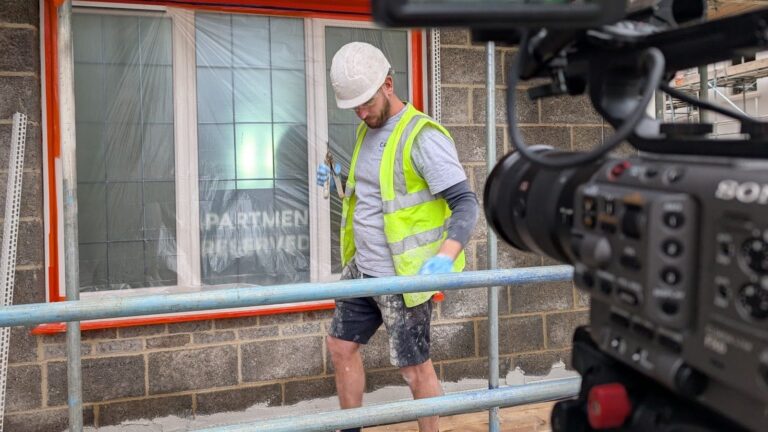
For Genesis’s STRATO launch, a 3mm tile decoupling membrane, we filmed the whole installation in live action. Genesis then wanted specific key points shown in 3D, and the brief called for a mix of 3D, 2D and live-action imagery. The filming shows how easy the product is to lay; the 3D shows the things our cameras couldn’t quite capture. The finished film works as a sales tool and as an internal training resource.
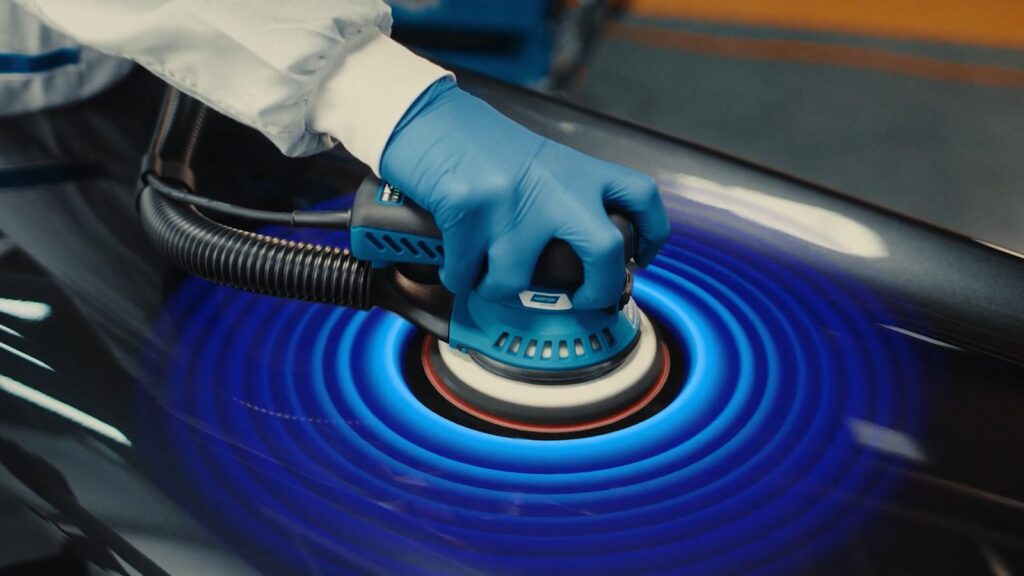
We did something similar for Norton’s electric sander launch, dropping 3D sequences into the live-action film (that’s the blue glow in the photo at the top of this post). If you’re still weighing up animation against filming, our guide to animated vs live-action explainer videos covers that choice in more detail.
2D vs 3D animation at a glance
| 2D animation | 3D animation | |
|---|---|---|
| Best for | Ideas, services, processes, people and characters | Products, machinery, materials and anything with a shape |
| Typical uses | Explainers, public health and awareness campaigns, training, social content | Product launches, technical showcases, installation and how-it-works films |
| What we’ll need from you | Brand guidelines, your key messages and time to review the script and storyboard | Product drawings, CAD files or samples, and an expert to check the technical detail |
| Changing it later | Text, voiceover and languages are easy to swap | The model can be re-rendered for new shots and stills |
| Cost | Usually the more affordable option | Usually costs more, because of modelling, texturing, lighting and rendering |
How much does 2D and 3D animation cost?
A straightforward 2D animated explainer usually costs £3,000–£6,000 + VAT. Larger animation projects, and most 3D work, start from around £10,000 + VAT.
The price depends on length, style and level of detail more than on the label. A short, simple 3D product spin can cost less than a long 2D film full of character animation. How many versions you need (cut-downs for social, subtitled or translated versions) makes a difference too. Every project is quoted to its brief.
2D and 3D animation FAQs
Which is more expensive, 2D or 3D animation?
3D usually costs more. Every object has to be modelled, textured and lit before anything moves, and the final frames take time to render. Detailed 2D character animation can still cost more than a simple 3D product shot, so it’s worth talking through what’s on screen before deciding on a style.
Is 2D harder to animate than 3D?
They’re hard in different ways. 2D relies on drawing and design skill, and turning a character to a new angle can mean redrawing it. 3D takes more technical set-up, but once a model is built, the virtual camera can move around it freely. For a client, the question that matters is which one shows your subject best.
How does 3D animation work?
Your product or scene is built as a digital model, given materials and textures, then lit like a film set. Animators set key positions for the movement and the camera, and the software renders each frame as an image. For product work, we start from your drawings, CAD files or samples, and your team checks the detail at each stage.
Will AI replace 3D animation?
AI tools are speeding up parts of the job, and they’re handy for quick concepts. For a product film, though, the detail has to be accurate, the brand has to be right and every frame has to stand up to your engineers. That still takes people who understand your product.
Not sure which one you need?
Send us a line about what you’re trying to show and who’s watching, and we’ll tell you whether it’s a 2D job, a 3D job or a bit of both, with a rough idea of cost. See our 2D and 3D animation production work, or get in touch and we’ll talk it through.
[/fusion_text][/fusion_builder_column][/fusion_builder_row][/fusion_builder_container]