A testimonial video is a short film in which a real customer explains, in their own words, why they chose you and what changed. A case study video tells the fuller story: the problem, what you did and the result, usually with interviews and footage of the work. Both work because the audience hears it from someone who isn’t you.
They’re also the films most likely to go wrong. Read a script to someone nervous and they sound like a hostage video. Film a great interview with nothing to cut away to and you’ve got three minutes of one face. Here’s how we get them right, with examples from our own shoots.
Testimonial or case study: what’s the difference?
People use the two words for the same thing, and plenty of films are a bit of both. The useful difference is how much story you’re telling.
| Testimonial video | Case study video | |
|---|---|---|
| What it shows | A customer’s opinion of you, in their own words | A specific project: the problem, the work and the outcome |
| Who’s on camera | Usually one or two customers | Customers, plus your own team and the work itself |
| Typical length | 30 seconds to 90 seconds | Two to four minutes, with shorter cut-downs |
| Where it works best | Homepage, landing pages, social, ads | Sales pitches, tenders, sector pages, events |
| What it needs | One good interview and some cutaways | Several interviews, access to the site or product, and more planning |
If you only have budget for one, a case study usually gives you more to work with, because you can cut short testimonial clips out of it afterwards. It doesn’t work the other way round.
A real example: Forfusion and Northumbria Healthcare
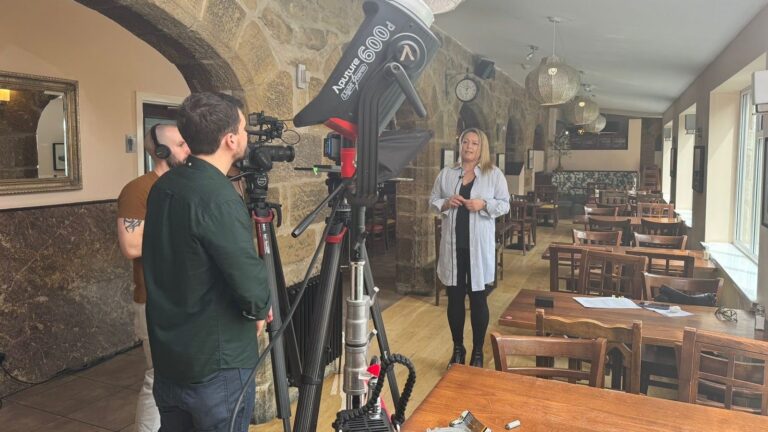
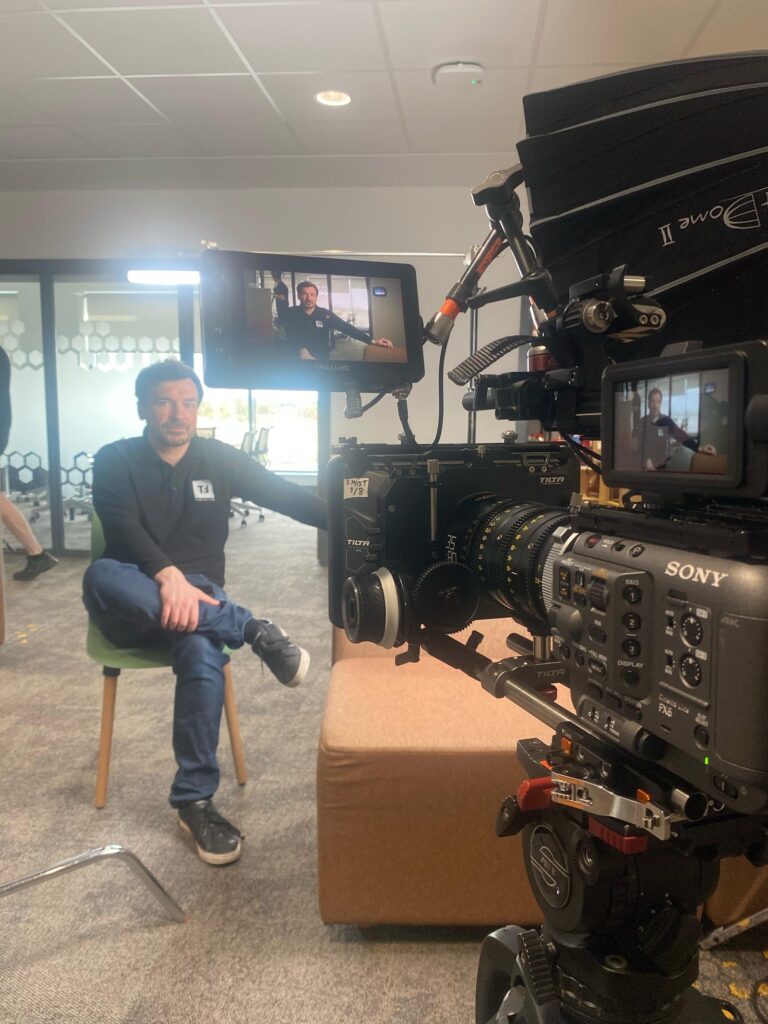
Forfusion, a North East digital transformation specialist, wanted a testimonial-led case study about its work with Northumbria Healthcare NHS Foundation Trust. We filmed it at the Northumbria Health and Care Academy, bringing together interviews with NHS staff and Forfusion’s own experts on how the company supports NHS digital projects, cybersecurity and connectivity, and why that matters for patient care.
It was a tight day, with back-to-back interviews and B-roll. Two things made it work. First, preparation: we knew exactly what each interview needed to cover before we arrived, so every minute on site counted. Second, a two-camera set-up with proper lighting, which lifted a classic talking-head format into something that looks polished but still feels honest. There were a few nerves at the start, as there nearly always are, but the interviewees were brilliant once they’d settled. The finished film was cut to work for pitches, the website and social sharing. You can watch the Forfusion and NHS case study film on our work page.
Testimonials aren’t only for customers
The same approach works whenever you need someone other than you to make the case: the people who use a service, or the people who do the job.
For St Oswald’s Hospice, we made a short film about the Focus on Living Centre, to show a side of hospice care most people never see. We spent a day inside the centre, filming pottery, creative sessions and conversations over tea, and let the people who use the centre lead the story. Nobody explains the centre better than the people who go there.
For the UK Public Health Register, the goal was recruitment: showing what public health practitioners do and how an apprenticeship can open the door to the career. The UKPHR career films keep the focus on the people doing the job, with practitioners explaining why their work matters and an apprentice, Mark, telling his story in his own words. We filmed in Newcastle and Sunderland, kept the style relaxed and documentary, and delivered subtitled versions so the films could be shown at a public health conference as well as online.
How to get a great testimonial on camera
The biggest factor in a testimonial isn’t the camera. It’s whether the person in front of it relaxes. Everything below is about that.
1. Don’t script your customers
Scripted testimonials sound scripted, and viewers can tell instantly. Instead, agree the points you’d like covered and ask open questions that lead there: what was going on before, why they picked you, what it’s been like, what they’d tell someone in their shoes. The answers will be less tidy and much more believable.
2. Choose the right people, not the most senior ones
The best interviewee is the person who actually lived with the problem and saw it fixed. That’s often the project lead or the person using your product every day, rather than the chief executive.
3. Spend time with them before the camera rolls
A few minutes of normal conversation does more than any lighting set-up. When we interviewed 16 people in two days for Bede Gaming, we made sure to chat with each of them first, and it showed in how open the interviews were. We’ve written more about this in our interview tips for video production.
4. Reassure them afterwards
Almost everyone thinks they were terrible. Tell them what worked, and remind them that stumbles and restarts disappear in the edit. Happy interviewees are also far more likely to share the film when it’s finished.
Plan the pictures, not just the interviews
A case study lives or dies on its cutaways: the footage of the place, the people and the work that plays over the interviews. Without them, you’re asking the audience to take everything on trust. With them, they can see it.
The rule we work to is simple: listen to what people say, then film what they’re talking about. For Wellburn Care Homes’ case study series, we filmed 56 interviews across 14 homes in three weeks, two staff and two residents at each, plus 2,361 cutaways of each home’s facilities and activities. What people said in their interviews decided which cutaways we used, and every home got its own film, so families could see the care at the home they were actually looking at.
Getting the most out of one shoot
Bringing customers, staff and a crew together is the expensive part, so it pays to plan every version you’ll need before the day rather than after it:
- A main film for your website, pitches and tenders.
- Short clips of single, strong answers for social posts and ads.
- Square or vertical versions if you’re posting on LinkedIn or Instagram.
- Subtitles on everything, since a lot of people watch with the sound off.
- Stills from the shoot for case study pages and proposals.
How much does a testimonial or case study video cost?
A short, simple film, such as a single day of interviews, starts from around £3,000 + VAT. Most of our projects, often a main film with cut-downs or a small set of videos, cost £4,000–£8,000, and larger campaigns start from around £10,000. Every project is quoted to its brief.
The main things that move the price are how many people you’re interviewing, how many locations, how much B-roll you need, and how many versions you want at the end. For a full breakdown, see video costs explained.
Testimonial video FAQs
What is a video testimonial?
A video testimonial is a short recording in which a real customer talks about their experience of your business, product or service. Because it’s a real person rather than your own marketing, it tends to be trusted more than anything you could say about yourself.
How long should a testimonial video be?
For a website or social post, 30 to 90 seconds is usually plenty: one customer, one clear story. Case study films can run two to four minutes because the audience, often a buyer or a procurement panel, is actively looking for detail.
Can customers just record a testimonial on their phone?
They can, and for a quick social post it’s better than nothing. The trade-off is control: sound, light and framing vary, and you get whatever they say first rather than the answer you needed. For a film that’s going to represent you in pitches and on your website for years, a properly filmed interview is worth it.
What should I ask in a testimonial interview?
Keep the questions open. What was the challenge before you started working together? Why did you choose this company? What was the process like? What’s different now? What would you say to someone thinking about it? Then follow up on anything interesting, because the best answers usually come from the second question, not the first.
Ready to put your customers on camera?
If you’ve got happy customers and a story worth telling, we’ll help you plan the interviews, the cutaways and every version you’ll need from the day. Take a look at our testimonial and case study video production, or get in touch for a chat.