Medical animation uses 2D or 3D animation to explain health subjects: how the body works, how a treatment or device works, or what a patient or member of staff needs to do next. It’s used for patient information, public health campaigns, staff training and medical product launches, because it can show what a camera can’t and doesn’t need a patient on screen.
If you search for medical animation, most of what comes up is 3D studios making mechanism-of-action films for pharmaceutical companies. That’s one end of it. The other end is what most NHS trusts, public health teams and healthcare organisations need: a clear, friendly film that gets one health message across to the people who need it. We do both, and this guide covers both, with two of our own projects as examples.
What is medical animation used for?
Healthcare animation usually falls into one of four jobs:
- Public health campaigns. Stop smoking, vaping, vaccinations, screening. Short films that have to grab attention on social media or a waiting-room screen and point people to one next step.
- Patient and service explainers. What happens at an appointment, how a pathway works, how to use a service or prepare for a procedure.
- Staff training and induction. Processes, safety messages and new systems for clinical and non-clinical teams.
- Medical devices and life sciences. How a product works, often in 3D, for investors, clinicians or buyers.
At the detailed end there’s anatomy and mechanism-of-action work: organs, cells and what a drug does once it’s in the body, built in 3D so the viewer can travel inside and see it happen. We make those too. The process is the same as any health film, just with more detail to get right and a medical or scientific reviewer checking every frame.
Why animation works so well for health subjects
Health is one of the subjects where animation earns its keep:
- You can show the inside of things. Lungs, a device, a process, a journey through a service. A camera can’t get there.
- Nobody has to be a patient on camera. Filming patients brings consent, privacy and safeguarding questions. Illustrated characters can stand in for anyone.
- Characters can be non-judgemental. Smoking, weight, mental health and money worries are touchy subjects. A drawn character can make the point without anyone feeling singled out.
- It’s easy to keep up to date. Guidance changes. Swapping a line of voiceover or on-screen text in an animation is far quicker than reshooting.
Example: an NHS stop smoking animation
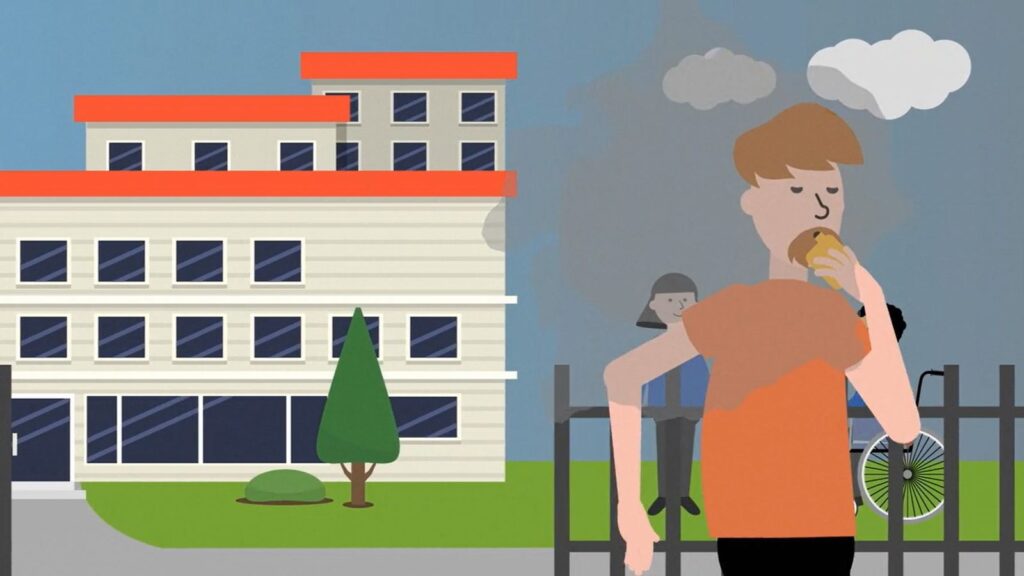
County Durham and Darlington NHS Foundation Trust asked us for an animation encouraging its own staff to use the Trust’s free stop smoking support. The job was to catch the right people, explain what’s on offer and give them one simple next step.
We had creative control as long as the key messages were in, so we went for a bright, clean, accessible style with a diverse cast of characters who look like the people who work in the NHS. Public health messages have to be clear, accurate and non-judgemental, so we swapped out anything that risked shutting people out. A scene about what you could buy with the money you’d save ended up showing a bike and some DIY, because luxury spending could have put parts of the audience off.
The first storyboard and draft script went over within seven days of kick-off, and the whole thing went from first meeting to sign-off in six weeks, with only minor amends from the Trust’s committee. One more thing: Luke recorded a temporary voiceover so the Trust could hear the timing while we animated. They liked it enough to keep it, so that’s him you can hear in the NHS stop smoking animation.
Example: a vaping animation made with the audience
Sunderland Public Health wanted a short, shareable animation to help young people understand the risks of vaping. The worry was that anything aimed at teenagers gets written off as a school lecture in disguise.
So before we animated anything, we ran a workshop with Year 10 media students at Sandhill View Academy. They told us what vaping looks like in their world and the myths they hear from friends, then helped design the characters and wrote a lot of the script themselves. Then we went back to the school and recorded the voiceover with the students themselves. You can read how it all came together in our public health vaping animation post.
The lesson works for most health films: put the audience in the room early. They’ll spot what won’t work long before a committee does.
Getting clinical accuracy and sign-off right
Most health films need several people to approve them: a clinical lead, comms, sometimes a committee. That’s normal, and it only causes trouble when nobody’s planned for it. Here’s how we run it:
- Agree the key messages first. Before any drawing, we pin down the facts that must be in the film and who signs them off.
- Lock the script before the visuals. The words get clinical approval first. Changing a sentence at script stage takes minutes; changing it after animation takes days.
- Storyboard, then animate. You see every scene as a sketch before it moves, so nobody gets a surprise at the end.
- Build review rounds into the schedule. Two rounds of changes are included as standard, and we plan the dates around your committee, so nobody’s chasing approvals the week before launch.
Wording matters as much as pictures. When we made a company film for Pulmo BioMed, a Northumbria University spin-out working on lung disease diagnosis, every claim had to be supported and approved, and the film still had to make sense to people outside the field. Same rule for animation: accurate first, then as simple as it can be without becoming wrong.
2D or 3D for healthcare animation?
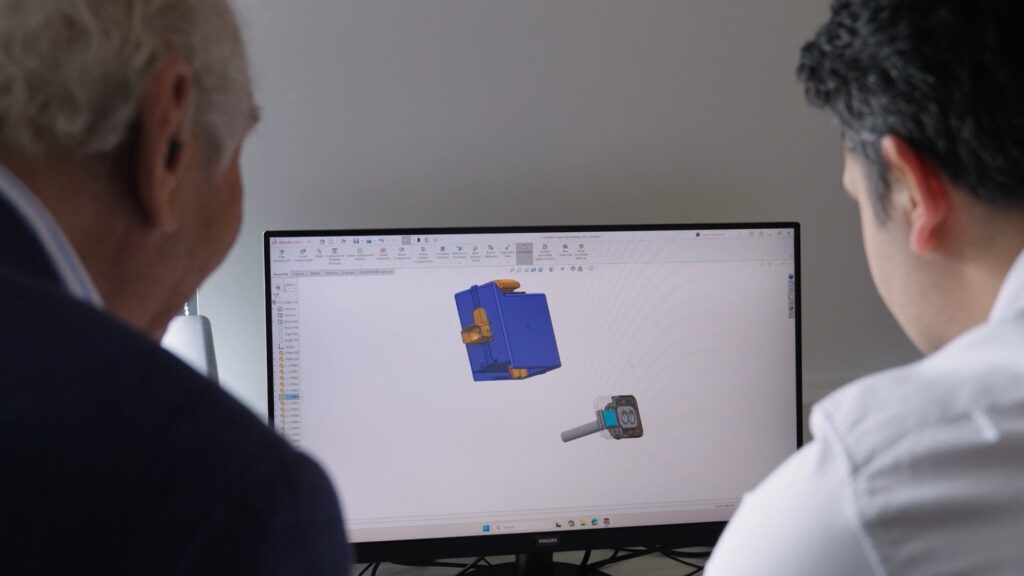
For most patient and public health films, 2D is the natural choice: characters, situations and simple diagrams carry the message, and it’s quicker and cheaper to make and update. 3D comes in when the subject is a physical thing, such as a device, an implant or the inside of the body, and the detail has to be right from every angle. We’ve gone into this in more depth in 2D vs 3D animation.
| What you need | Usual style | What we’ll need from you |
|---|---|---|
| Public health campaign | 2D characters, bold and simple | Key messages, the audience, where it’ll be shown |
| Patient or service explainer | 2D, calm and clear, with subtitles | The pathway or process, and a clinical reviewer |
| Staff training | 2D or motion graphics, sometimes mixed with filming | The process, the policy and someone who does the job |
| Anatomy or mechanism of action | Detailed 3D | Your key claims, references and a medical or scientific reviewer |
| Medical device or product | 3D, often alongside live action | CAD files, drawings or a sample, and an engineer to check it |
Make it accessible
Health films have to work for everyone: people who are deaf or hard of hearing, people watching with the sound off in a waiting room, and people whose first language isn’t English. Our healthcare films come with subtitles (the stop smoking film was delivered with and without them), and animation makes translated versions much simpler, because the voice and text can change while the pictures stay the same. Public sector bodies also have accessibility rules to meet, which we cover in our guide to video accessibility and WCAG.
How much does medical animation cost?
A straightforward 2D animated explainer usually costs £3,000–£6,000 + VAT. Larger animation projects, and most 3D work, start from around £10,000 + VAT.
The biggest factors are length, style, how much detail is on screen, and how many versions you need (subtitled, translated or cut down for social). A long review process doesn’t have to add cost if it’s planned in from the start. Every project is quoted to its brief.
Medical and healthcare animation FAQs
What is a medical animation?
It’s an animated film that explains a health topic: how part of the body works, how a treatment or device works, or what someone needs to do. Pharma companies use detailed 3D versions to show how a drug acts. NHS trusts, councils and charities mostly use 2D animation for public health messages, patient information and staff training.
How long does a healthcare animation take to make?
It depends on length, style and how many people need to sign it off. As a guide, our NHS stop smoking animation went from first meeting to sign-off in six weeks, with the first storyboard and draft script delivered within a week. 3D work and films with several approval stages take longer.
Do I need a script before I get in touch?
No. Most clients come to us with the message, the audience and any guidance they have to follow. Turning that into a script your clinical team is happy with is part of the job.
Can you work with our clinical and comms teams?
Yes. We agree up front who reviews what and when, and build it into the schedule. Your experts check the facts; we make sure it’s clear, watchable and on brand.
Got a health message to get across?
Tell us who it’s for and who needs to approve it, and we’ll come back with a plan, a style and a rough idea of cost. Have a look at our healthcare video production work, or drop us a line for a chat.