
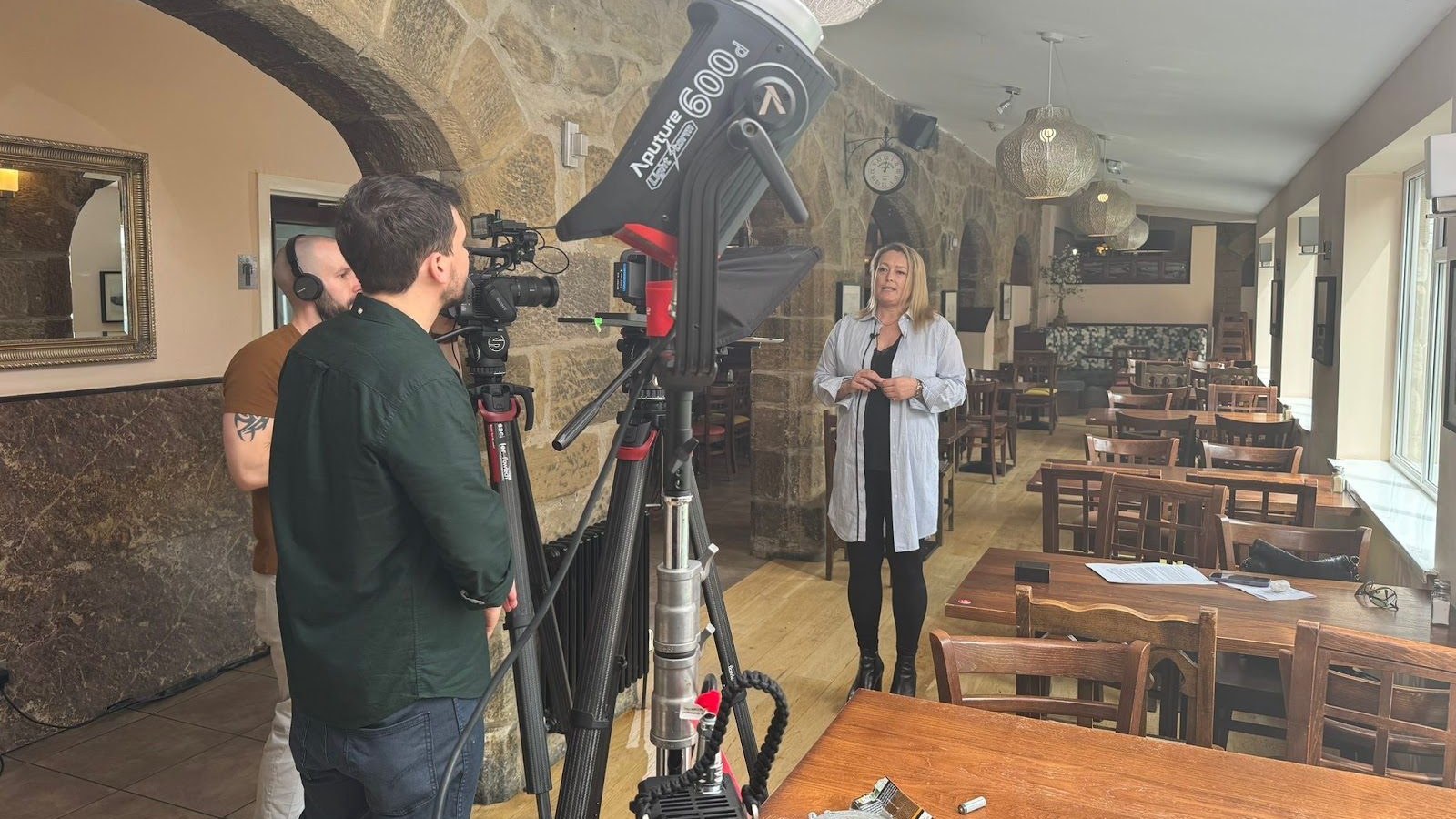
A corporate video is any film a business makes to communicate with its own staff or its customers. The most common types are brand films, product demos, customer testimonials, case studies, training films and event highlights. Each one has a different job, so the right choice depends on what you need people to do after they watch: trust you, buy, learn something or apply for a job. Here are ten types, with examples from our own work and when each one earns its place.
What counts as a corporate video?
Corporate video is a broad term. It covers anything a company makes to tell its story: a film that introduces the business, a launch video for a product, a training module for new staff. What links them is purpose. Each film is made for a specific audience and a specific action, rather than to look good on its own.
The 10 types of corporate video
- Brand or company films. A short overview of who you are, what you do and what you care about. Useful on your homepage, in tender responses and at trade events.
- Product launch and demo films. Show the product working, in real conditions where you can. It’s the most direct way to answer “does it actually do that?”
- Customer testimonials. A client talking about their experience in their own words. A testimonial film does more than a quote on a page, because people can hear the tone of voice.
- Case studies. A longer look at one project, from the problem through to what was done. Good for prospects who are comparing suppliers.
- Training and onboarding films. Short modules that teach a process, a piece of kit or a policy. They’re easy to update and easy to repeat, which can work out cheaper over time than running the same session again and again.
- Explainer videos. A film that makes a complicated idea simple. It can be live action, animation or a mix of both.
- Event and conference highlights. A recap of a conference, launch or evening, for people who weren’t there and for those who were.
- Recruitment and culture films. A look inside the working day, so candidates can judge whether they’d fit in before they apply.
- Social cut-downs. Shorter versions of a main film, cut for feeds in square and vertical formats. They’re worth planning in from the start, not cutting as an afterthought.
- Animated corporate films. Used when the subject is abstract, technical or hard to film: software, data, the inside of a machine, or a sensitive topic.
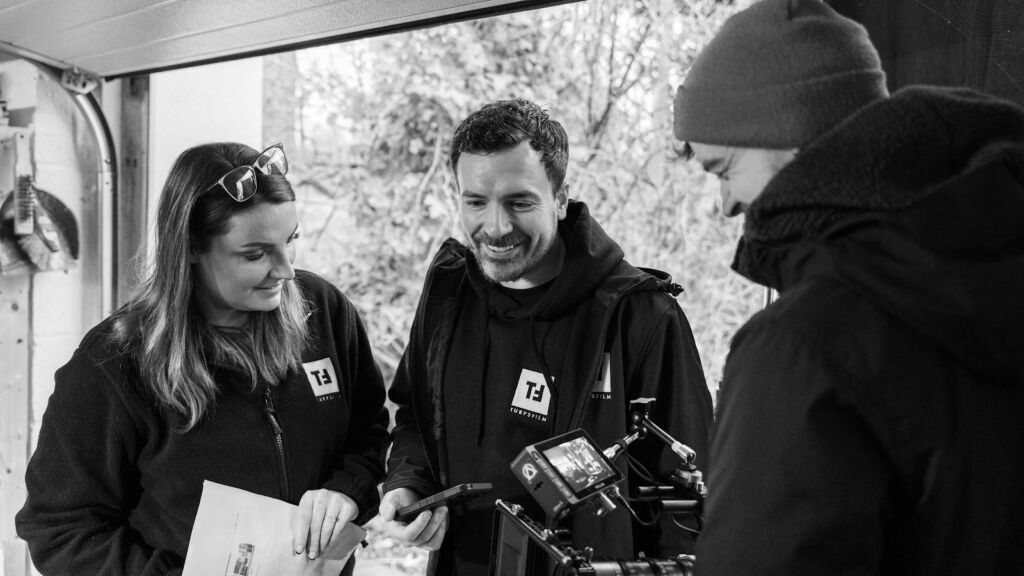
Corporate video examples from our own work
Each of these is live on our site, so you can watch the finished films.
- Product launch: a product video for the Norton Electric Sander range, shot at a prestige bodyshop, with social cuts, photography and multilingual outputs for the launch.
- Commercials for social and in-store: two commercials for Weber’s weberjoint sealant, made in 16:9, 9:16 and 1:1 for social platforms, the website and in-store use.
- Brand films and explainers: films for the IE Hub fintech: a brand film, two staff interviews and eight FAQ explainers, planned in advance and filmed in a single day.
How to choose the right type
Start from the action you want. If the viewer needs to trust you, testimonials and case studies do that job. If they need to understand a product, a demo or an explainer will do more. If they need to learn something, a training film is the right tool. Most businesses end up needing two or three types, and a single shoot day can often cover more than one. Plan the shoot around that list, not the other way round.
Three questions help before you write a brief: who is the film for, what should they do once they’ve watched it, and where will it be seen? The answers usually point to one or two types on the list, and they’ll show whether you need one main film or a set of cut-downs for different channels.
| Type | Best for | Filmed or animated |
|---|---|---|
| Brand film | Introducing who you are | Usually filmed |
| Product demo | Showing how something works | Either |
| Testimonial | Building trust | Filmed |
| Case study | Showing one project from start to finish | Filmed |
| Training | Teaching one process or policy | Either |
| Explainer | Simplifying one idea | Either |
| Recruitment | Showing what working there is like | Filmed |
| Social cut-down | Drawing people in on feeds | Cut from the main film |
What does a corporate video cost?
A short, simple film, such as a single day of interviews, starts from around £3,000 + VAT. Most of our projects cost £4,000–£8,000 + VAT, often a main film with cut-downs or a small set of videos, and larger campaigns start from around £10,000. Every project is quoted to its brief. For what moves the price up or down, read video costs explained.
Corporate video FAQs
What is a corporate video?
A film made by a business or organisation to communicate with its staff, customers or partners. It can be a brand film, a training module, a product demo or anything else with a clear purpose. What makes it corporate is who it’s for and why it exists, not the format.
How long should a corporate video be?
Most work best under three minutes, and digital channels often need something closer to 90 seconds. Make the full version for your website if you need depth, then cut shorter pieces for social and presentations. The message should set the length: a training module can run longer because the viewer has a reason to stay.
What is a corporate videographer?
A videographer who films business content, such as interviews, events, product shoots and brand films. Many also plan and edit the work, which is worth checking when you compare suppliers. Ask who will write the script, who runs the shoot and who cuts the final film.
Find the right corporate video for your business
If you’re planning a corporate video, tell us what it needs to do and who it’s for. We’ll come back with a clear, itemised quote, usually within two working days. Take a look at our corporate video production service, or get in touch to talk it through.






Leave A Comment